


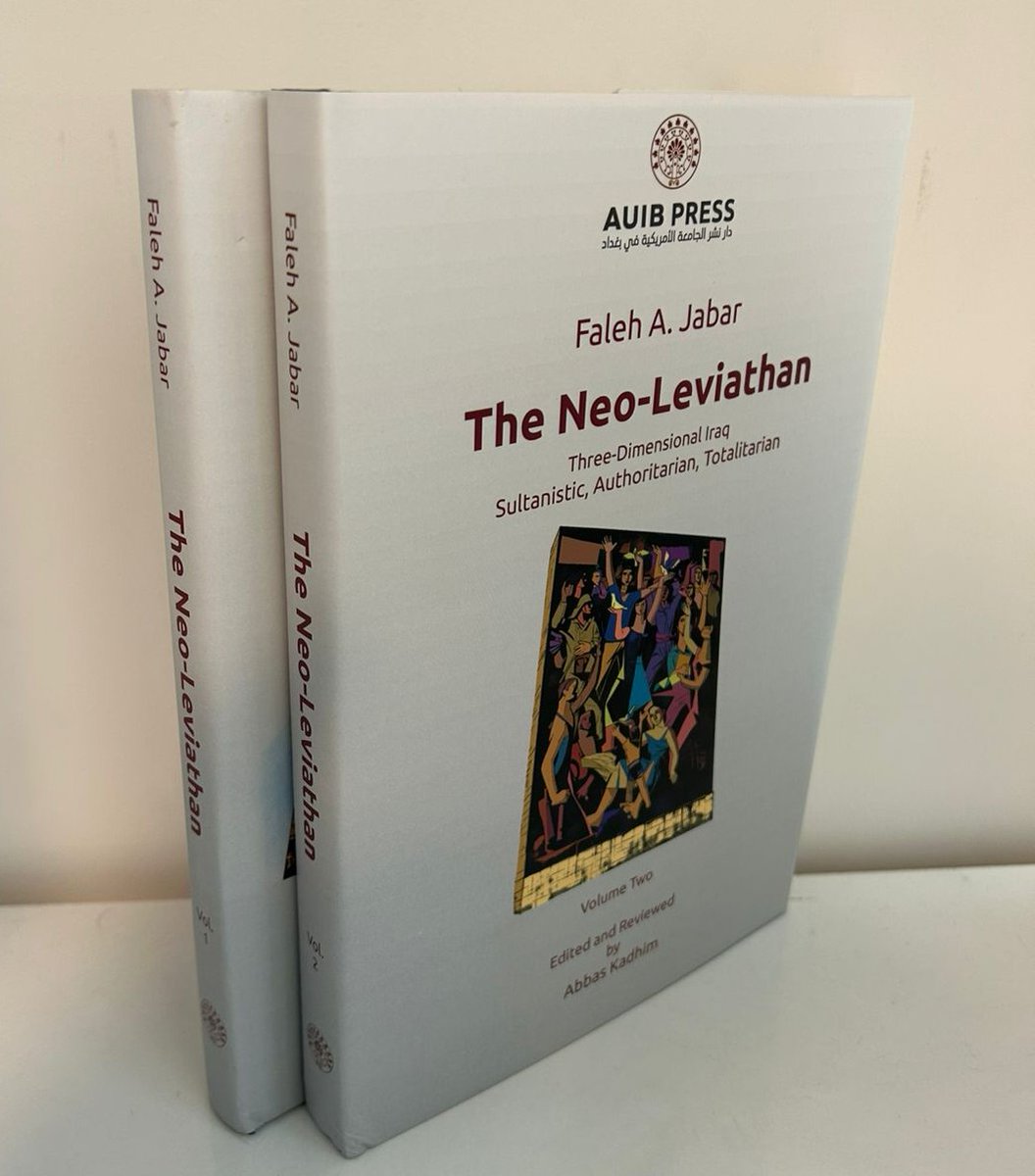

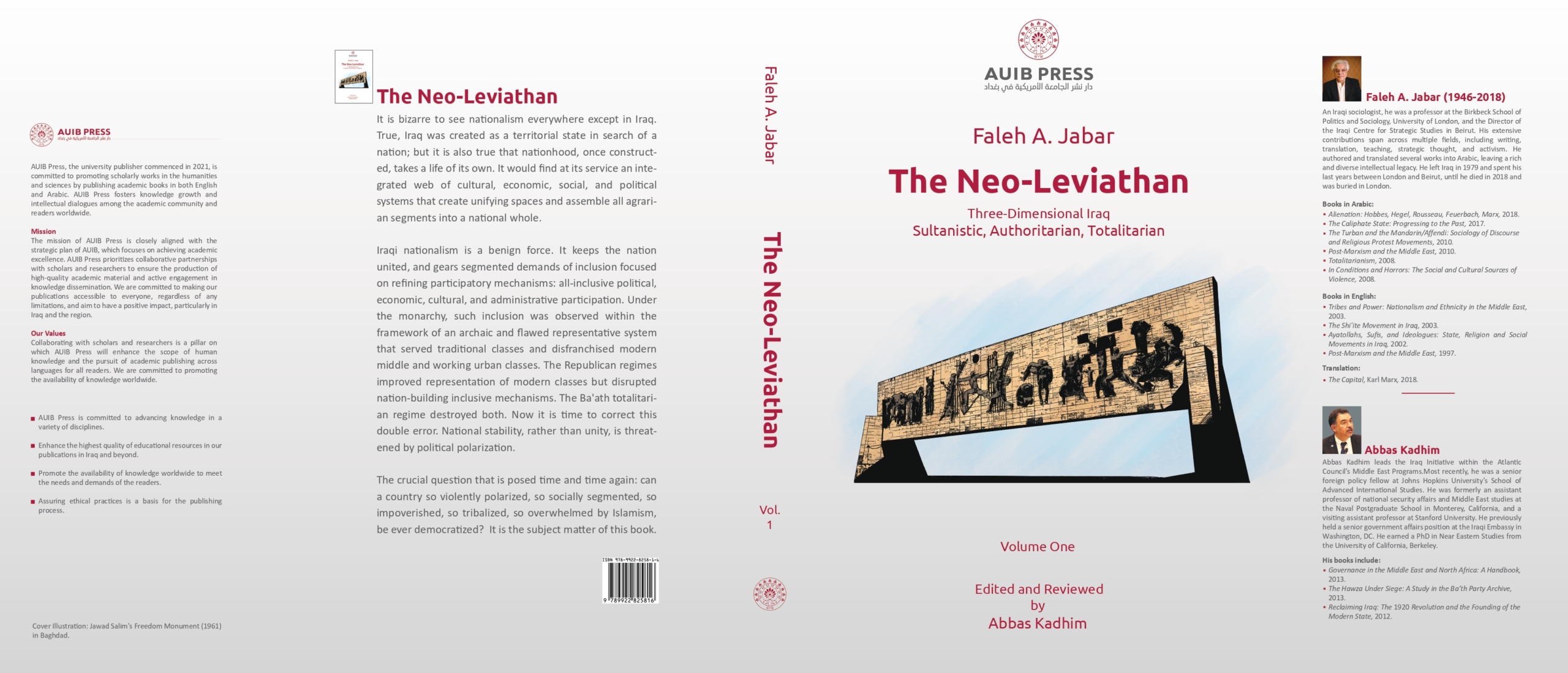
The Neo-Leviathan, Three-Dimensional Iraq Sultanistic, Authoritarian, Totalitarian V2
د.ع20,000.00
The Neo-Leviathan: Three-Dimensional Iraq offers an in-depth analysis of Iraq’s modern political landscape through three intertwined dimensions: sultanistic, authoritarian, and totalitarian. The book examines how power structures, state institutions, and social dynamics interact to shape governance, societal behavior, and the challenges of nation-building in contemporary Iraq.
Additional information
Description
Author
Faleh A. Jabar (1946-2018)
An Iraqi sociologist, he was a professor at the Birkbeck School of Politics and Sociology, University of London, and the Director of the Iraqi Centre for Strategic Studies in Beirut. His extensive contributions span across multiple fields, including writing, translation, teaching, strategic thought, and activism.
Editor
Dr. Abbas Kadhim
is an Iraq expert and author of Reclaiming Iraq: The 1920 Revolution and the Founding of the Modern State. He leads the Iraq Initiative within the Atlantic Council’s Middle East Programs. Most recently, he was a senior foreign policy fellow at Johns Hopkins University’s School of Advanced International Studies.
Description:
In this book, Faleh Abdul-Jabar poses a very important question in assessing the Iraq democratization trajectory, which is the subject of this book: “Can a country so violently polarized, so socially segmented, so impoverished, so tribalized, so overwhelmed by Islamism, be ever democratized?” To answer this question, Dr. Faleh draws on many fields of his research strength. He did an extensive thematic review of all political ideas that apply to Iraq and/or help explain the country’s political development, especially the painful theory and praxis of the European experiences of the last two centuries. He then spends much time presenting an analytical review of the modern Iraqi state and its political and ideological history, leading his reader to many discoveries of how the key Iraqi political and ideological characteristics were borrowed from, or inspired by, their European experiences and where local conditions proved to be decisive. I will not take much space here to review themselves.
It is bizarre to see nationalism everywhere except in Iraq. True, Iraq was created as a territorial state in search of a nation; but it is also true that nationhood, once constructed, takes a life of its own. It would find at its service an integrated web of cultural, economic, social, and political systems that create unifying spaces and assemble all agrarian segments into a national whole.
Iraqi nationalism is a benign force. It keeps the nation united and gears segmented demands of inclusion focused on refining participatory mechanisms: all-inclusive political, economic, cultural, and administrative participation. Under the monarchy, such inclusion was observed within the framework of an archaic and flawed representative system that served traditional classes and disfranchised modern middle and working urban classes. The Republican regimes improved representation of modern classes but disrupted nation-building inclusive mechanisms. The Ba’ath totalitarian regime destroyed both. Now it is time to correct this double error. National stability, rather than unity, is threatened by political polarization.
The crucial question that is posed time and time again: can a country so violently polarized, so socially segmented, so impoverished, so tribalized, so overwhelmed by Islamism, be ever democratized? It is the subject matter of this book.
Volume 1
ISBN: 978-9922-8258-2-6
DN 3832-2024
First Publication 2024
Volume 2
ISBN: 978-9922-8258-2-3
DN 3833-2024
First Publication 2024
Publisher: AUIB Press

Reviews
There are no reviews yet.